the tail end, revisited

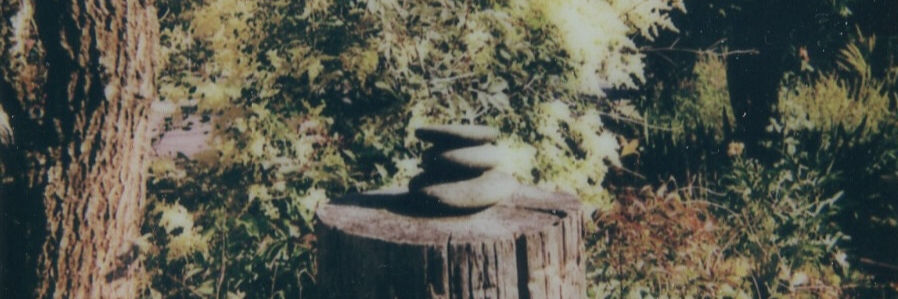
lana price, foxglove and azaleas, 2026, polaroid 600, 4.25" x 3.5"
This essay is about navigating relationships as we and our loved ones age. Though the concepts can apply to any important relationship, I use aging parents as the primary example. This is both a tender subject and complicated terrain. Please take what works for you, and leave the rest.
the tail end, revisited
One of the most impactful essays I’ve ever read is “The Tail End” by blogger Tim Urban (TU), published in December 2015 on his blog, Wait But Why.
The Tail End is about the finiteness of life, displayed visually. TU charts a human lifetime in grids, as units of time, and as units of activities. But the most impactful part was how he laid out the number of days he would spend with his parents.
He estimated that during his first 18 years, he spent most of his days with his parents. But since leaving for college, he probably sees them an average of 10 days per year. Even if his parents lived 30 more years, at 10 days per year, he’d only see them 300 more days. Which is less than any one of his years in childhood.
“...You realize that despite not being at the end of your life, you may very well be nearing the end of your time with some of the most important people in your life… It turns out that when I graduated from high school, I had already used up 93% of my in-person parent time. I’m now enjoying the last 5% of that time. We’re in the tail end.”
the tail after the cliff
A grid is repetitive and consistent, representing the unrelenting uniformity in the march of time. But life, and the relationships and interactions within it, does not happen in a steady, linear fashion.
TU wrote the Tail End when he was 34. For me, knowing you’re in the tail when you’re in your 30s, with your parents in their 60s, is pretty darn different from being in the tail end in your mid-40s, with your parents in their late 70s.
Researchers have found that aging doesn’t happen gradually, it happens in bursts. A Stanford Medicine study published in 2024 found that we undergo two periods of accelerated aging during our lifetime: at around age 44 and age 60.
Emily Gould, writing for The Cut, referred to the burst at 44 as “the first aging cliff.”
Falling off the first cliff is shocking. It’s disorienting. The changes aren’t just physical, they’re also internal. There’s an unavoidable awareness that we’ve catapulted over into the second half of life, and things will never be the same.
For me, it’s been a call to step forward even more boldly, as my true self. Launching Pragmagical is a big example of that.
Last year my dad also fell off the cliff -- of stage 3 cancer. During his treatment, he lost so much weight his legs were no longer strong enough to hold up his body. Within a span of months, he went from running six miles per day to no longer being able to walk or drive. He said he aged a decade in under a year.
the tail gets real
When folks start falling off cliffs at the same time, the tail end moves from being conceptual to really real. And things start happening. Relationships start changing. Long-established roles start to flip on their head.
During my dad’s cancer, my sister and I would alternate traveling to my parents’ house to provide additional support. The first time I had to help my dad into the car, and drive him to his appointments, I remembered how he was the one who taught me how to drive. What used to be private matters (like finances), started to become shared discussions. Fears were revealed, and brave faces were put on.
My dad is, thankfully, now in remission. He has slowly regained his lost weight and is increasing his walking distance.
Getting sick was a huge wake-up call. Now my parents are packing up their house to move near my sister. The geography of our long-distance family is reorganizing. More changes to come.
TU’s takeaways
Tim Urban ends his essay with 3 takeaways (paraphrased here), which I completely agree with:
Proximity matters. Try to live near the people you love.
Set your priorities consciously. Don’t let inertia get in the way.
Treat your time together as precious.
And I would add a fourth.
When we recognize that the tail end of our relationship is not going to be a steady-state version of what it was before… Because we’ve changed, they’ve changed, the context has changed, and everything has been flipped on its head… We can turn to ritual to meet that change.
honor life transitions with ritual
My friend Emily showed me what this could look like. After a lifetime in New York City, her parents decided to sell their apartment (her childhood home) and move cross-country to be near Emily and her husband.
Emily marked the occasion with a beautiful letter to her parents.
She thanked them for forty years of opening their home to her friends, her boyfriend, and eventually her in-laws. For letting her cover her bedroom door in stickers. For trusting her to ride the subway to school alone, even when she got lost on the first day. For not moving to the suburbs when everyone else they knew did.
This was emotionally courageous, because it was outside how her family communicated. Feelings mostly went unspoken. Their love language was “acts of service”: they showed their love through doing helpful things for each other.
In writing this heart-felt letter, Emily was speaking a new love language: words of affirmation. She was letting her parents know how much she valued and appreciated them, by reflecting on how her life was positively impacted by the decisions they made.
She was also stepping into emotional leadership during a period of unexpressed grief. She was no longer the daughter who played by the unspoken rules of marching ahead; she was redefining the game, in an incredibly vulnerable way. She was expressing who she is, a person with great capacity to feel, and showing this way of communication was possible.
rituals are pragmagical
In Bruce Feiler’s book, “A Time To Gather,” he says that ritual, by definition, is unnecessary.
Pragmatism focuses on the problem at hand: in this case, selling the apartment. It would’ve been so easy to let the logistics and frenziness take over. It’s absolutely unnecessary to reflect on the meaning of the moment, and to make that experience communal. But that’s what makes it magical.
In Feiler’s book, ritualist Sarah Kerr says that rituals give us the ability to slow down time, so that the internal can catch up with the external. In writing and sending this letter to mark the occasion, Emily slowed down the march of time to let her grief and gratitude catch up with what was happening.
In the midst of change, through the endings and beginnings, there is also opportunity. A ritual doesn’t need to be elaborate or expensive. It can be a letter, a simple ceremony, or a gathering. It can be shared or private, with family or with chosen family. It can honor those who are no longer with us.
Through it, we can bravely venture into new roles, new norms, even new languages of love.
Because if not now, when? After all, we are in the tail end.

i'm lana price and this is my biweekly-ish newsletter. i write about navigating life transitions, bridging practicality and possibility. you can find other writing here. subscribe to get these straight to your inbox.