generating serendipity

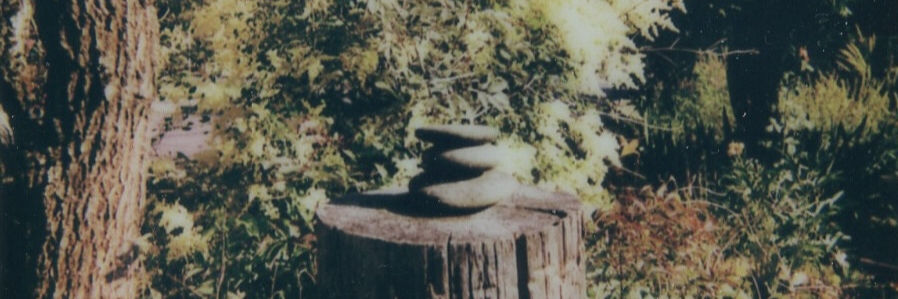
lana price, wishing tree, 2026, polaroid 600, 4.25" x 3.5"
I have an essay on my computer that I first read ten years ago, that I will re-read anytime I remember it.
It’s titled “How to Cultivate the Art of Serendipity.” It was written by Pagan Kennedy, and was published in the New York Times on January 2nd, 2016.
Serendipity is a very specific type of luck: it’s finding pleasing things that one had not been looking for. And what Kennedy found is we can train ourselves to become more serendipitous.
Kennedy points to research from Dr. Sandra Elderez, who in the mid-1990s had a study to find out how people created their own serendipity. Elderez’s data showed that subjects fell into three distinct groups:
Non-encounterers miss opportunities by staying too focused on narrow goals;
Occasional-encounterers stumble upon happy surprises now and then; and
Super-encounterers actively cultivate unexpected discoveries, and believe they will find them.
I’d say at best, I’m an occasional-encounterer. But some of those now-and-then serendipitous moments have literally changed my life.
serendipity can change everything
In college, I did a summer semester at UC Berkeley, and got randomly assigned to live with Emily, a public policy fellow. Spending the summer with her and her policy friends inspired me to change my path from pre-law to the nonprofit sector.
After college I was living in Seattle, applying for public sector jobs all over the country. Not having any luck, I decided I would move first, then find a job. I responded to an online listing for a roommate in Washington, DC. I mentioned that my major was political science, my work experience was at a law firm, but my intention was to move to DC and find a job in the nonprofit sector.
Tiffany, who posted the listing, happened to be a paralegal, and she responded that her boss was opening a nonprofit legal center focused on campaign finance reform -- and they were hiring for an assistant manager. She forwarded me the job posting. I applied for the job and got it, and moved to DC a few weeks later.
(Though by the time I got there, Tiffany had already found another roommate.)
The dictionary will tell you that serendipity is a noun, but the concept can actually be a verb. It can be a practice. I have some pragmagical tips on what that practice can look like, but first let me tell you about my good friend, Erik Trinidad.
meet erik, a real-life super-encounterer
Erik is an incredibly creative and generative person. In 2003 he traveled around the world for over 16 months on a shoestring budget and wrote a blog full of hijinx, generosity, and wonder, which got him on the map (pun intended!) as one of the OG travel bloggers of the early aughts.
He self-published an ironic cookbook for fun— taking fast food meals and recreating them as fancy dishes— and as a result, went viral and was featured on the Rachel Ray show.
His timeline shows the inventiveness of his thirty years of personal projects, all following his evolving interests and creativity.
Erik experiences serendipitous moments as part of his daily life.
Two summers ago, my husband, Mel, and I were on an extended stay in Barcelona, and Erik came to visit us. We went out for dinner one night, and as we were walking back through a residential neighborhood to the subway, Erik stopped and said, “Wait, I hear something.”
It was a distant thumping sound. It was coming from the opposite direction of the subway stop, but we decided to take a detour and investigate.
We turned the corner, and stumbled upon an outdoor neighborhood block party. Even though we were originally headed home, we all wound up drinking aperitif shots from paper cups and dancing in the streets until almost midnight.

This type of thing, stumbling across a nighttime outdoor dance party, is par for the course when you’re a super-encounterer.
But what about the rest of us? How can we cultivate serendipity, not just for ourselves, but as a shared practice? Here is what I’ve learned:
how to practice serendipity
Smell the bouquet of time. The poet Ross Gay, in his book, The Book of (More) Delights, says that when his plans change, when he’s very early or someone is very late,
“It can feel like the universe just dropped… a luminous bouquet of time in your lap…. Time which is scant and sinister…becomes spacious as the sky in Montana.”
Seeing time in such a spacious way is a huge mindset shift. It’s similar to how one might feel on vacation, free from the constraints of the daily schedule. This openness sets the stage for serendipity.
Develop your sagacity. Sagacity is a fancy word for “a highly-developed sensory perception.” It’s like a Spidey-sense, but for delight instead of danger. It’s the moment when Erik said: “Wait, I hear something.”
It’s what the Surrealists employed in their collective walking practice in 1930’s Paris. As art historian Lori Waxman wrote about in her book, Keep Walking Intently, it’s how these avant-garde artists practiced collective observation, moving through the city together, encountering the marvelous as a group.
Gather string. In the New York Times article, Kennedy refers to the first stage of journalistic reporting as “gathering string.” It’s the accumulation of observations, notes, and details (the “string” in a journalist’s pocket) that eventually come together into a coherent story. This is a very deliberate, creative act of noticing the pieces that others overlook, trusting that it will eventually reveal some meaning.
Follow through. Sometimes it’s not enough to just notice, or gather string, but the revealed opportunity will require something of you: a bit of action and risk-taking. Hearing the music is one thing, deciding to walk in the opposite direction of your destination to follow it, is the chance for something wonderful.
Embody a generosity of spirit. News alert: we can also generate serendipity for others. We have the power, even through very small acts, to change the course of people’s lives. Isn’t that amazing?!
Tiffany didn’t need to tell me that her boss was hiring for his new nonprofit. I was a 23-year old internet stranger who lived across the country! But she very generously shared that lead with me (and I followed through) and my life was forever changed.
optimism is self-fulfilling
Inherent in all of these things is openness and optimism. Optimism is the general expectation that good things will happen. Yes, there are constant reminders that the world is a scary and dangerous place. And that corresponding fear and anger in our bodies is constrictive, it closes us off.
Can we hold the tension: that the world can be both scary/dangerous AND magical/wonderful?
Obviously, we need to practice discernment. But can we tip the scales towards optimism and wonder, perhaps by choosing to generate it ourselves, and sharing it with others?
Ten years ago I bookmarked this article, because when I read it, I recognized my default programming was as a non-encounterer. I have a lifelong unhealthy relationship with my to-do list and my calendar, which can make my purview too tightly focused.
Looking back, now I can see the underpinnings of this serendipity practice, and this mindset, in how I developed as an artist, how I scan for signals (a type of string-gathering), and how I see the world. It’s an active choice, which is in itself an act of optimism.
Here’s to making the world a luckier place. Here’s to finding pleasing things we haven’t been looking for, and to creating more pleasing things in the world to be found.

PS - If you have a story to tell about a moment of serendipity, I’d love to hear it. Please just reach out with your anecdotes. Who knows, maybe I’ll write a follow-up, and your story might inspire someone else.

i'm lana price and this is my biweekly-ish newsletter. i write about navigating life transitions, bridging practicality and possibility. you can find other writing here. subscribe to get these straight to your inbox.