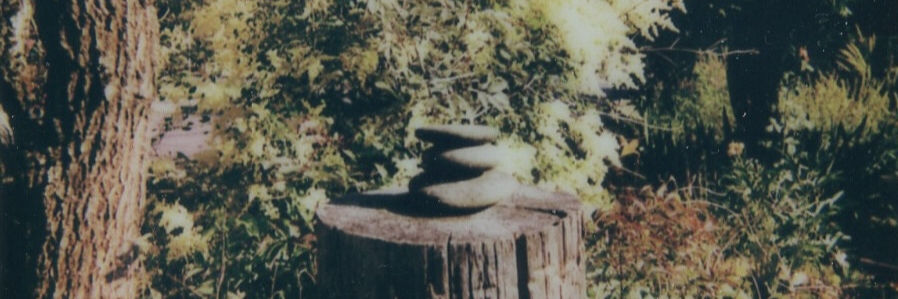
the courage to see the future

lana price, reflection, 2024, polaroid 600, 4.25" x 3.5"
Like so many others, the experience of Covid fundamentally impacted my life. I was living in NYC at the time of the outbreak, the epicenter of the first wave in the US.
It was an equally scary and surreal time — and I remember how vulnerable, and dumb, I felt. My then-boyfriend (now-husband) and I had no food on hand, no toilet paper, no car. Leading up to this, all that life energy I spent thinking and planning ahead — all my little goals, strategies, calendar techniques — didn’t add up to diddly when the sht really hit the fan. I was NOT PREPARED. There were people out there who were seemingly in the know, and I was definitely not one of them. And I wanted to be!
I wanted to be the person who saw the storm brewing on the horizon. And had the time to get their ducks in order (or at least grab some toilet paper).
So in 2022, I got certified to become a futurist. Technically, it’s called strategic foresight, which is a systematic approach to studying the future. It’s a methodology that companies and organizations use for long-term scenario planning. It’s how ExxonMobil projects oil and natural gas supply to 2050 and how the state of California anticipates the changing needs of its workforce over the next twenty years. I can save you a few thousand bucks with my little primer below.
But first, I want to acknowledge how much harder seeing the future feels right now. I don’t know about you, but 2019 seems like a cakewalk compared to 2026. There’s such a firehose of craziness happening everywhere all at once right now, and we just out here trying to make it in the polycrisis. It’s overwhelming enough to get through the day’s news, let alone to try and see ahead.
This very validating article found that in times of crisis, people lose the ability to envision the future. This can look like despair, lack of plans, an inability to look forward to anything. This is a deeply human response to an overwhelming amount of uncertainty hitting from all directions at once. We’re essentially working against our biology: our brains aren’t wired to work through this much noise and uncertainty to form a clear picture.
Also, know that the overwhelm is part of the design — remember when Steve Bannon said, of the media: “They’re dumb and they’re lazy, they can only focus on one thing at a time. All we have to do is flood the zone. … Bang, bang, bang. These guys will never – will never be able to recover.” Add AI slop into the mix, and the zone is definitely flooding.
So what do we do? Here are five core principles about being able to see the future, and a better world:
First face that everything will change. In the Parable of the Sower, Octavia Butler’s prescient novel from 1993 (which foretold the Make America Great Again movement, literally), the novel begins with a passage: “All that you touch You Change. All that you Change Changes you. The only lasting truth Is Change. God Is Change.” This is one of the core tenets of the book and the protagonist’s journey — acceptance of a chaotic, ever-changing world is the first step to shape and adapt to that change, rather than become victims of it.
This acceptance is fundamentally challenging. Facing that everything will change touches the same existential primal fear in acknowledging that we — you, me, everyone we know — will die. It’s painful. Psychologists Greenberg, Solomon, and Pyszczynski found that so much of our behavior is driven, subconsciously, by mortality anxiety. They called it Terror Management Theory.
And the solution is counterintuitive.
Bringing this more into consciousness, naming the fear rather than avoiding it, actually helps us move through it. The avoidance is what keeps us frozen. We need a strong emotional capacity to help us face these big truths so that we can also work from it.
It’s all about how you notice the world. Being a futurist is less about predicting and much more about noticing → then imagining → then storytelling possible scenarios. And not just highly positive or negative scenarios, it isn’t all utopia or 100% apocalypse, it’s the weird and amazing and disturbing and everything in-between.
Signals are all around. As the science fiction writer William Gibson famously said: “the future is already here, it’s just unevenly distributed.” Looking across the external environment (one could use the STEEP framework: scanning across the Social, Technological, Economic, Environmental, and Political landscapes) the assignment is to look for signals.
A signal is a concrete example, happening today, of how the world could one day be different. A signal isn’t obvious, it’s happening on the fringes. It’s like finding a raindrop. Whereas big drivers of change (like our aging society, AI advancement, climate change) are obvious deluges.
Look backwards to look forwards. In strategic foresight, looking backwards is a core scanning practice. The better we understand the deep historical layers underpinning how we got here, the richer our understanding of where we may be headed.
Finally, remember we have our agency and creativity. Nothing is pre-determined. This is where we can place our creative courage and our skillz — in storytelling, worldbuilding, in taking our visions and giving it form. Extrapolating what might happen, and then building narratives and worlds around it is powerful. We can influence the course of events.
Albert Einstein, whose name is synonymous with genius, even said: “Imagination is more powerful than knowledge.” That’s why we have seen such prescience from science fiction — you have to see it to believe it.
getting pragmagical
Here’s something super annoying about trying to foresee the future: it all comes back to the present. (GROAN, I know.) The current moment is a seed that can bloom in incredible directions. The present is where we have direct influence. Today’s decisions have consequences — they influence not only our lives but our world, and what choices are open to us down the line.
Pragmagical is all about holding the tension between the pragmatic and the magical. Yes, we can use a pragmatic methodology, like strategic foresight, to scan our environment, gather signals, look backwards, and form hypotheses about where things might be headed. And we also need to hold space for the unexpected, to have the courage to imagine that things can be better. Even when, especially when!, that feels impossible to picture.
I constantly remind myself that intentions are powerful. It’s the word you say when you release the arrow from the bow and send your deepest desires out into the world. You want to go in a direction, so speak it out loud, but release the how.
Cynicism and doomsday-prophesizing are self-fulfilling. But the good news is that the opposite is also true: long-termism and optimism, moving to a bigger picture of what’s possible, are also self-fulfilling.
What I’ve learned is that foresight isn’t about predicting the future. It’s about having the courage to look toward it, to hold the imagination of multiple possibilities, and to recognize that we can shape it.
many blessings,
lana
PS. Until very recently, I thought I’d been completely blindsided by Covid. But while writing this piece, I went looking for when I first became interested in strategic foresight, and found I signed up for the Institute for the Future newsletter in early January 2020. Maybe I wasn’t as blind as I thought. Maybe I intuitively sensed something was gathering on the horizon, even if I couldn’t name it. Noticing the signals in the world may also include noticing the signals from within.

i'm lana price and this is my biweekly-ish newsletter. i write about navigating life transitions, bridging practicality and possibility. you can find other writing here. subscribe to get these straight to your inbox.