group help > self help

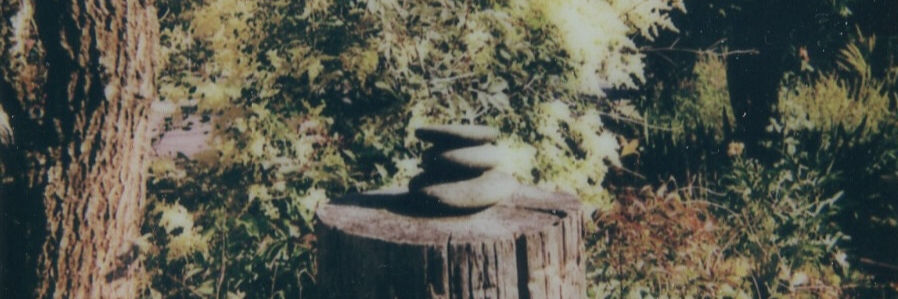
lana price, for all the birds, 2026, polaroid 600, 4.25" x 3.5"
It was 2015. I was in my mid-30s, single, living in New York City, and wanting to meet a life partner. I wondered: is dating just a numbers game?
Dating has its highs and lows. I would get bursts of energy where I would earnestly try to “put myself out there.” But inevitably, I’d get stood up, ghosted, disappointed or dejected, and would “take a break,” sometimes for four to six months.
So if dating was a numbers game, I wasn’t even on the scoreboard.
enter self-help
At that time, I was reading a lot of self-help books. The self-help section of the bookstore is like a candyland paved with promises… that I can improve my life, and overcome my problems, without anyone’s help. As long as I learned and implemented the formula, it was all under my control.
I was reading cringe-worthy titles like: Have The Relationship You Want, Have Him at Hello, and the real kicker: It’s Not Him, It’s You!
The idea that I was the problem spoke to my inner taskmaster. If I knuckled down and dated like it was my duty, shouldn’t I be able to get the reps in? To get the numbers I needed to finally meet someone?
But I needed a way to make this fun somehow. And to be held accountable.
the Duty Dating Challenge was born
I recruited a few friends who were also single for a challenge: to go on as many dates as possible within a 10-week period.
I designed a Google Form that served as a log: every time someone went on a date and submitted a log, they got a point. Those logs were emailed to the rest of the participants where they could reply and comment.
At the end of the round, the person with the most points would “win” the Duty Dating Challenge (DDC), and theoretically have increased their chances of meeting their dream person.
Is dating just a numbers game? Now we had multiple subjects participating to test the hypothesis. It was a collective social experiment.
an experiment grows
After the first round, folks wanted to do it again, and they wanted to invite their friends. The DDC spread by word of mouth, eventually settling on an east coast and west coast cohort.
Somewhere along the way it stopped being about dates and points and became about the community: the feeling that you weren’t moving through dating alone. The cohorts started doing in-person meet ups, and we started going on trips all together.
When I look back, the DDC was likely the most important project of my life. It is where I met the most incredible people who are still some of my dearest friends. And also where I met my husband.
group help > self-help
Dating was not something I was successfully doing on my own, but in community, I had the support to do it. The idea started with a premise that came from self-help (“duty dating”), but through group help the concept evolved. From duty dating to deliberative dating. From a challenge to a collective.
Priya Parker, the author of the Art of Gathering, says:
“Our culture is obsessed with self-help. But self-help isn’t helping us with these questions of our shared life. We need group help… How do we build the skills, habits, and rituals to help our groups thrive?”
When I think about our shared, group life, I think of the different groups we belong to -- our families, college friends, our neighborhood association, run club, networking groups. They are part of the fabric of society.
Group help can happen inside group life, when we bring what we’re moving through to the group instead of handling it alone.
The DDC happened the other way around: it began as group help, a way to get through dating, and became part of our shared, group life.
Group help is more important now than ever. But there are strong headwinds.
everything is self-help now
Derek Thompson wrote a piece titled, “You Are No Longer Invited To Dinner,” about the decline of Americans hosting friends or family at their home. In 1975, 42% of Americans had someone over to their house at least monthly; now that rate is 12%. Thompson points to a few key social and cultural trends over the past fifty years, and one of them is that: “it’s too much fun to be home alone.” He writes: “
But on any given Wednesday at 7:45pm, it is easier to look at a screen than to host a party; easier to listen to a podcast while doing yoga than to plan a gathering…”
And this trend isn’t just relegated to social events. A small study published last year documents how college students are turning to AI rather than seeking help from peers. The group chats have gone quiet. As one student put it, “nobody really talks because most or all the questions are answered by ChatGPT.”
Self-help used to be just a section of the bookstore. Now everything is self-help. It’s the same promise: that we can improve our lives on our own.
We’re living in highly personalized bubbles with a strong one-to-one interface -- with our AI tools, our social media channels, our customized audio and video content. Each one promises more convenience, more entertainment, more improvement, and none of them needs anyone else to show up.
It takes skills to be in community with each other. It takes practice. The social atrophy from the pandemic, the prevalence of working from home, and the lure of the personalized bubble… these are the headwinds against a robust group life. But it is critically important.
the power of group help
The most powerful thing that groups and communities give us is the felt sense that we’re not alone. Irvin Yalom, an existential psychiatrist, named “universality” as one of the therapeutic factors in groups. It’s realizing “I am not the only one.”
When you go on a bad date on your own, you can feel that it’s some type of verdict, a personal failing. But when it’s part of a collective experiment, it’s one data point. When you see others’ bad dates, you can see that it isn’t just you.
Groups also show us a bigger spectrum of possibilities, from real humans in real time. As I wrote about in living the dream, living a shared dream isn’t a zero-sum game. When someone goes on a date they rank a 5-out-of-5, that doesn’t mean you are less likely to go on a 5-star date. It means that such things are possible.
Group help also gives the opportunity to help others. There is an energy of giving and receiving. It’s just as powerful to support someone else as it is to receive that support.
But there are also tradeoffs. There can be pressure to conform, or to exclude those who don’t quite fit in. And the more communication there is, the more possibilities for miscommunication.
For as many people who stayed in the DDC, there are more who drifted away. A group isn’t right for every person, for every season. It takes time to find the right group, and to build it. But these aren’t reasons to avoid groups altogether, they’re part of why it takes practice.
looking back to look forward
When I started this project, I wanted my life to change, but I was struggling to make it happen. I turned to self-help, to treat this as a problem to solve through sheer effort. But the DDC offered something else, which was to move through the challenge together. We set out to fix our lives, and ended up witnessing each other’s.
The structure of the group was pragmatic: there was a mission, a form, points, and a 10-week sprint. It also took trust -- people were invited in by a friend, and there was shared vulnerability. But over time what emerged was magic, something that transcends the structure or the numbers. It was friendship and community, a shared place where we can face the uncertainty of life.
While this was built to “get through” one transition, to try and go from single to partnered, it wound up holding up through the many transitions that life brings: breakups, weddings, job changes, the births of children, the death of loved ones, and the moments in-between.
Is dating just a numbers game? Trying to find the answer to this took me on a journey beyond my wildest imagination. And part of me feels called to revisit it. I don’t know yet what it will become, but I know I don’t want to answer it alone.

i'm lana price and this is my biweekly-ish newsletter. i write about navigating life transitions, bridging practicality and possibility. you can find other writing here. subscribe to get these straight to your inbox.