transition is the new normal

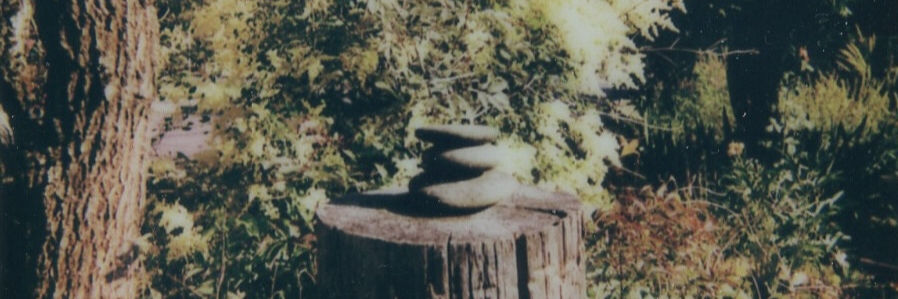
lana price, a door to a scene, 2026, polaroid 600, 4.25" x 3.5"
a universal doorway
I’ve been thinking about Covid as a period of time, and what significance it might have in our collective life stories.
It was a period that was so destabilizing globally, it turned our worlds upside down on a scale that was never seen before.
For me, the rupture was larger than the scary surrealism of NYC as an early epicenter in the US. I felt confronted by my mortality, and it was like a near-death wake-up call: to marry the boyfriend I loved, to hear my soul’s calling to make art, and to move closer to family.
In the narrative of our lives, Covid could be considered an “inciting incident.” It’s a pivotal moment in the story that disrupts the protagonist’s normal life and kicks off the plot. The suspense writer James Scott Bell says the inciting incident is a doorway through which the protagonist cannot return.
Covid has become a clear marker in time, a universal doorway. In conversation we often hear people qualify something that happened as “before Covid” or “during Covid.” It's hard to say whether we'll experience anything again in our lifetimes that’s as visceral and disorienting.
But we will absolutely, individually and collectively, go through many life disruptions.
life disruptions and major moments
In his book, Life Is In The Transitions, the author Bruce Feiler defines “life disruptors” as an event or experience that interrupts the everyday flow of one’s life. He wanted the term to be value-neutral, as some disruptions, like having a child or moving to a new city, aren’t necessarily negative, though they are still disruptive.
Feiler actually quantifies it to say that we can expect to go through 30-40 life disruptions in the course of our lives, basically one every twelve to eighteen months. These disruptions can range from clear markers like relationship changes, jobs, moves, and health diagnoses to things that are more subtle, like changes in belief systems or identity.
He distinguishes between these disruptions, many of which might be run-of-the-mill changes, and those that are truly destabilizing.
According to Feiler’s research, we will likely experience three to five destabilizing major moments (he calls them “lifequakes,” though I don’t love that term), that upend our lives and lead to a period of total upheaval, transition, and renewal.
These major moments can be triggered by something involuntary: like getting laid off, a health crisis, or a natural disaster. Things that happen to you. Or they can be voluntary. This is when you initiate the change: to leave the job, to adopt a family member, to reveal a hidden part of your identity.
What triggers a big life change might not be just one moment, but a cluster of things that happen at the same time: it’s the lay-off + your parent’s diagnosis + the death of a beloved pet that takes it to a point where your life fundamentally changes.
The other thing that Feiler’s research uncovered, which I found super interesting, is that these major moments initiate a period of transition -- and the average length of a major transition takes about five years. Why? Because it’s like crossing a long shaky bridge. You don’t just snap your fingers and start a new chapter on the other side. He breaks the transition into three stages: the long goodbye, the messy middle, and the new beginning.
So if we do some simple math: if we can expect about 3 to 5 major life changes that take about 5 years each, that would be 15 to 25 years of transition during our lifetime (!!)
transition is the new normal
Technically, the pandemic lasted from March 11, 2020 to May 5, 2023. We’re six years from when the pandemic started, and just three years out from when it ended. So if you’re like me, still feeling like you’re in-between somehow, still moving through the changes, let’s give ourselves some grace.
Right on the heels of Covid came the “AI revolution”: ChatGPT was officially released on November 30, 2022 and according to this research from Stanford University, generative AI has already reached at least 53% global population adoption, faster than the PC or the internet. And both AI capabilities and adoption are expected to accelerate.
If we go back to the lifequakes, the term I don’t love but now I’m going to adopt, the earth is continuing to rumble beneath our feet. These events, Covid and the AI revolution, are some major life disruptors. They will be named in the history books of the future, and we are experiencing them back-to-back as a collective. And you don’t need to be a futurist to expect more to come.
Some upside: even if we can’t control what happens to us, we can decide how to respond. It is entirely up to us how we define these moments and make meaning of them.
the stories we tell
Dan McAdams is a psychologist at the forefront of narrative identity theory, which posits that individuals define who they are by constructing an internalized, evolving life story. McAdams says we can narrate life’s turning points using either a contamination narrative, or a redemption narrative.
Simply put, the contamination narrative tells the story of major events as ones that made our lives worse. In redemption narratives, the major events made our lives better.
This reminds me of the Chinese parable: the old man lost his horse. In this parable, the farmer goes through various situations which all have important consequences, and the neighbors have a running commentary on whether the happenings are good luck or bad luck. The farmer doesn’t label the events one way or the other, he meets each turn knowing its true meaning has yet to unfold.
To me, this says: when we’ve stepped through the doorway-- our inciting incident, our major moment -- we know we’re living the story of a massive change in real time. It may be hard to judge whether what’s happening is ultimately “good” or “bad” in the larger scheme of things. It is inherently unknown. Life isn’t linear, and thus we can’t predict or assume that one thing will lead to another in any direction.
But we can choose to live the story. To engage with it as it comes, to know we are making the best decisions we can in that moment under those conditions, and to continue to see how things unfold.
And as we look back and reflect on our past, we can tee-up the plot: were the events that led to this moment part of a contamination narrative, or a redemption narrative? The great news is: we get to decide. McAdams ran a study in 2001 that showed that people who framed their life stories around redemption (finding a positive turn within difficult experiences) reported higher psychological well-being, while those whose stories were dominated by contamination, where bad moments reigned, reported lower well-being.
These findings seem pretty obvious to me. The story we tell ourselves really matters. It is self-fulfilling!
walking each other home
Finally, we can walk together as we navigate transitions -- and expand our narrative to include other characters moving through something similar. It’s so easy to feel that we’re alone in feeling off, unmoored, overwhelmed, or that we’re somehow failing at the game of life. But this IS the game. There’s no such thing as a stable, linear life, or a linear story (how boring!). We were born to transform, to become our true selves, and to go through this together.
As Ram Dass says, “we are all walking each other home.”
If you think of your life as a story, what were the major moments that shifted the plot? And how are they moving you closer to who you are becoming?

i'm lana price and this is my biweekly-ish newsletter. i write about navigating life transitions, bridging practicality and possibility. you can find other writing here. subscribe to get these straight to your inbox.