the case for a strong goodbye

Updated: Apr 21
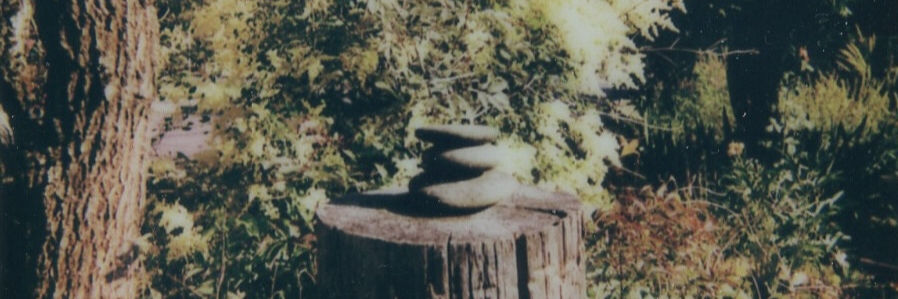
lana price, gehry's sphere, 2024, polaroid 600, 4.25" x 3.5"
I've long been guilty of the French exit*, aka the Irish goodbye, aka the quiet escape.
I absolutely love starting things. I love a new beginning and that clean-slate, fresh-start feeling.
But I find endings to be pretty hard. And messy. And so I've found it easier to try and downplay them, to slip away, to not make it a big deal.
When I was in my 20s, once I hit my limit at social gatherings, I simply gathered my things and walked straight out the door. I didn’t want to bother anyone with a goodbye, or risk staying even one extra minute.
This is also true of jobs I've had, relationships, projects, living situations… Internally, once I felt it was over, then it was over, and from that point on, it was about execution. Moving through the steps as quickly as possible.
Rushing past goodbyes sidesteps the mess. Untangling the bittersweet knots of memory, shared experience, and emotions is hard work. There’s great efficiency in barreling through. But there is a cost, too.
Without a solid close, one risks leaving energy behind. They might be small traces or bigger remnants. This could include unspoken words, emotional residue, general psychic debris.
If anything, it’s a missed opportunity.
I had a former boss who said, “People remember strong beginnings and strong endings. They don’t remember the middle.”
a mental model
I had two friends I used to hang out with in NYC, Hamilton & Robbie. There were many things I adored about them, but I was especially struck by how they would enter and leave a room.
When we would go to a gathering at someone’s house, they would take the time to walk around and say hello and introduce themselves to each person in the room. And when they were getting ready to leave, they would make it a point to circle back around and say goodbye to each person, too.
They are both Ecuadorian, and I learned this practice is cultural. It’s considered rude if you don’t greet each person individually. Same with departures--shouting a general “Bye!” and waving from the door isn’t sufficient; one needs to make an effort to acknowledge each person before they go.
Granted, this always made the goodbye process last longer, and had to be initiated at least a half-hour before one was actually ready to leave.
But aside from that logistical detail, this impressed upon me a very clean way to bookend the experience. There were no energy leaks here. The individual eye-contact-and-handshake hello and goodbye embodies that “strong beginning, strong ending” concept.
honoring the ending
This lesson can also apply to life transitions. We may be in a rush to move forward, to get to that next step or stage, to know the answers. But we might not be as willing to formally acknowledge, or even celebrate, the stage we want to leave behind. To give the goodbye the time and space it deserves. To bookend the experience.
I am in a career transition. I have a “first career” that I’m very proud of -- I’ve spent twenty years in the field of nonprofit finance, and feel accomplished yet complete with that work. I’m ready for my next career, and I took some intentional time off in 2024 to explore what that might look like.
2024 turned into 2025, and by June of that year, I was 15 months without work obligations (liberating), 15 months without income (scary), and still no clearer on what came next.
I was ready to move forward. But how?? I decided to move forward by looking back, and give the ending its due. This looked like:
naming the beginning. I went back through all of my journals, calendars, and notes to create a timeline of my career transition, and realized it actually began in 2022, when I had started to have some difficult conversations and take concrete steps to reduce my workload.
giving credit. I documented everything I did during this three-year time, from 2022 to mid-2025, giving myself credit for all of the experiments, trainings, travel, coffee meetings, volunteer projects, hobbies, business ideas, and life milestones I was able to accomplish.
writing a letter. I then wrote myself a letter expressing deep gratitude for what this time gave me. My dad was diagnosed with stage 3 cancer during this period, so I was grateful I had the flexibility to be with my parents in Arizona and help them navigate treatment including an emergency hospital stay. (My dad is now in remission.)
I also included in my letter a list of things I was ready for. Although I had so much to be thankful for during my break, I also wanted to let the Universe know that I was ready for what was next.
ritualizing a close. I then burned the letter (safely, of course) in my backyard.
Less than two months later, I received a request to work on a big project (read: get paid), but the project was squarely in my “first career” line of work. I had previously poo-poo’d similar proposals because I didn’t want to spend time “moving backwards” when I could be expanding into new skills and experience. But part of what I let go in my ritual was the idea that my progress had to look a certain way. This time I accepted the offer with a complete feeling of peace and ease in my heart.
The burning of the letter wasn’t a magic trick that summoned this project. It was a way to give form to this important period. It was me taking the time to look it in the eye, shake its hand, and say goodbye.
Make no mistake, I am still in a career transition! Now in my 4th year! But I have come to accept that the process takes time, and isn’t linear. And ironically, since going back to work, some of my disparate experiences from my time off have gelled to form a hazy idea of a new career to experiment with.
And so we begin again. A strong ending, a new beginning.
* This is a fun fact: The phrase French exit emerged in mid-18th-century England, where "French leave" was used pejoratively to describe someone departing without permission or formalities—an act then considered quite rude. Interestingly, in French, the equivalent is filer à l'anglaise ("to leave English style").
How about you-- have you ever done a ritual to close a chapter? What did it look like?

i'm lana price and this is my biweekly-ish newsletter. i write about navigating life transitions, bridging practicality and possibility. you can find other writing here. subscribe to get these straight to your inbox.